


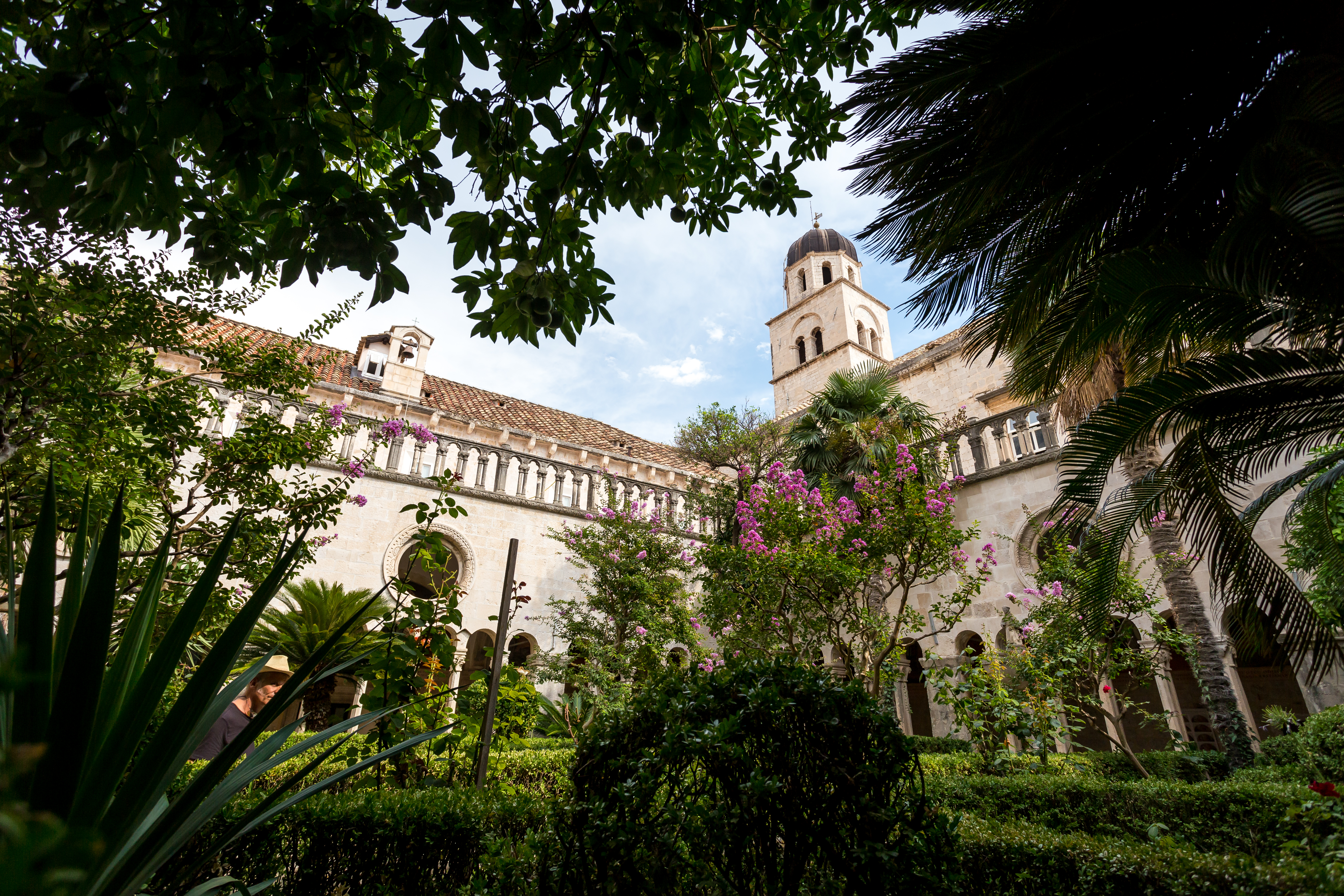
At first glance, Dubrovnik’s historic Old City appears as a solid stone structure, with little room for greenery. Yet, this initial impression is one of the many surprises the city holds. Though dense and compact, Dubrovnik hides a stunning network of gardens – monastic, cloistered, private terraces, and green oases – which together form its quiet, Mediterranean, green soul.
For event organizers and incentive program planners seeking an innovative way to explore the city, a "green" walk through Dubrovnik – a tour of gardens within and around the city walls – can be an excellent idea. In this version of the tour, rather than following the usual routes, participants discover fragrant citrus trees, rich horticultural compositions and hidden green oases with deep historical stories.
Monastic Gardens – Silent Spiritual and Botanical History
Particularly striking are the gardens within monastery complexes, which have been nurtured and maintained for centuries. The Franciscan Monastery of the Friars Minor, home to the famous pharmacy from 1317, also holds the oldest continuously maintained garden in Dubrovnik. The 14th-century Romanesque cloister, surrounded by arcades and filled with citrus, palms, roses, crepe myrtles and geraniums, is open to the public and offers tranquillity and inspiration for any group seeking a peaceful and fragrant experience. At the garden’s centre lies a stone path with benches and a fountain featuring a statue of St. Francis.
In addition to this garden, the Franciscan complex includes a 16th-century Renaissance cloister, closed to the public, and a large terraced garden stretching from the monastery’s north wing to the playground beneath Minčeta Fortress. It features a 50-metre path and is cultivated with citrus, fruit, vegetables, and vines.
Near the eastern city gate stands the Dominican Monastery, whose Gothic-Renaissance cloister from the late 15th century provides another example of architecture and greenery in harmony. Its garden contrasts beautifully with the stone triforiums and an additional area with an orchard and vegetable garden offers opportunities for thematic tours focused on monastic agriculture and herbal use.
Green Corridors and Private Gardens – An Authentic Glimpse into City Life
In addition to well-known monastic gardens, Dubrovnik is home to many smaller, often private green spaces. Terraces and gardens, many of which emerged from ruins after the 1667 earthquake, are now spaces where locals grow olives, rosemary, vines, lavender, and seasonal flowers. Notable is the garden near the Church of St. Stephen, which fully embodies the spirit of a Renaissance Dubrovnik garden – with a chapel, stone path, flower beds and cistern.
This is only part of the city’s green story – Dubrovnik abounds with other monastic and private gardens, hidden corners, and fragrant oases waiting to be discovered. A guided walk through these spaces can become a rich and memorable program for small groups, VIP guests, incentive teams, and fans of sustainable tourism.
Sustainability and Local Involvement – Added Value
For event organizers, sustainability and local authenticity are increasingly important. Dubrovnik’s green gardens offer just that – a living, organic story of nature and culture in coexistence, featuring local guides and gardeners.
Each garden also reflects the care of its residents – through potted plants, decorated stairways, or vines that stretch across terraces and stone bridges. In this authenticity lies the opportunity to experience Dubrovnik not only as a UNESCO heritage site but also as a living city with a beating heart.
Practical Recommendations for Organizers:
- Ideal group size: up to 15 people for a full experience and access to smaller spaces
- Best time for tours: morning or late afternoon for optimal lighting and temperature
- Duration: 2–3 hours with optional themes (horticulture, history, spirituality)
- Additional activities: mini cloister concerts, herbal-themed picnics, workshops, Mediterranean gardening lessons, or herbal infusion tastings
- Best seasons: spring and early autumn, when gardens are in full bloom
Dubrovnik’s gardens are living witnesses to centuries of harmony between nature, culture, and community. The blend of history, aesthetics, sustainability, and authenticity makes this type of city exploration a truly unique opportunity for innovative incentive programs. In Dubrovnik, even within stone walls, nature holds a special place – waiting to be discovered.
d.