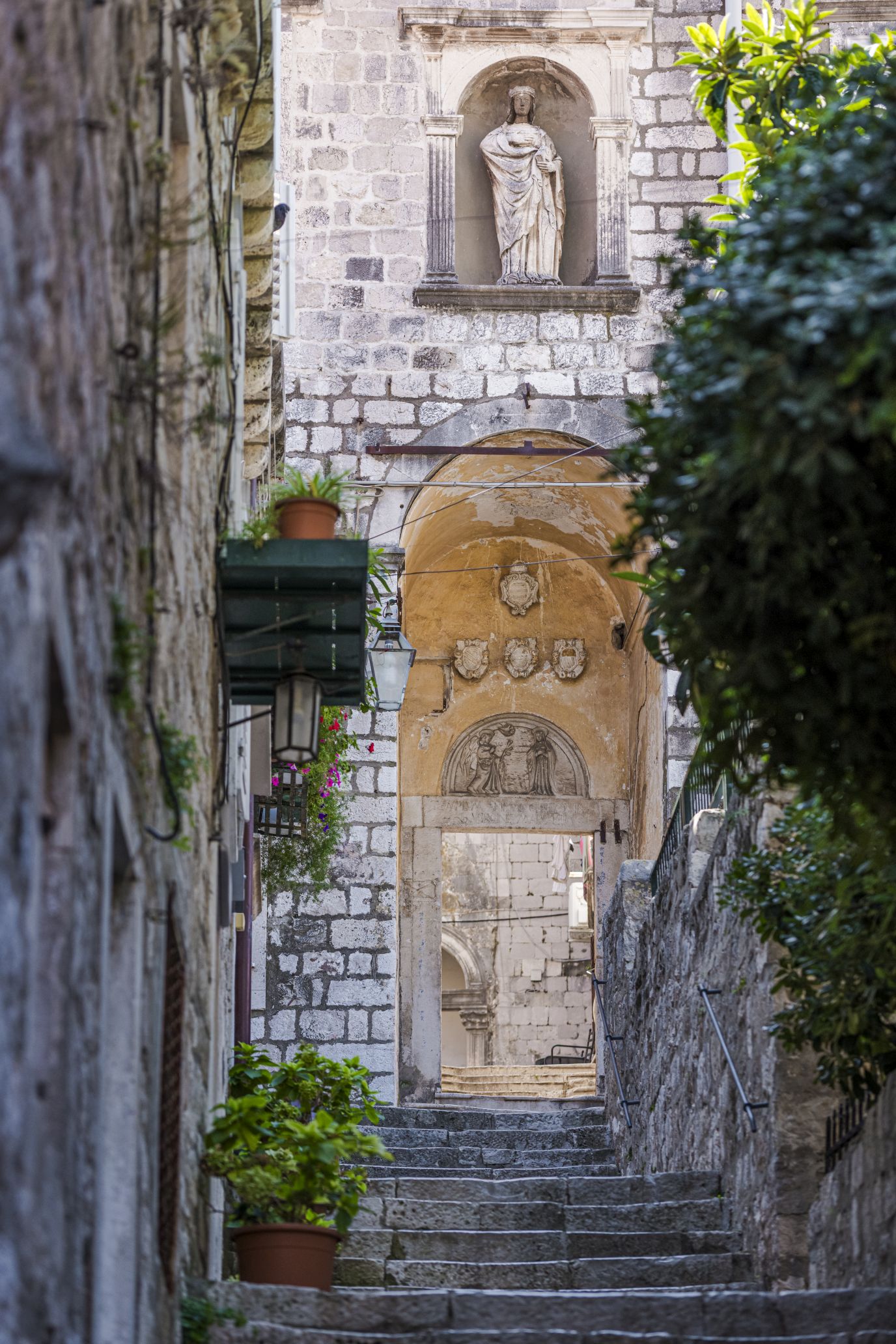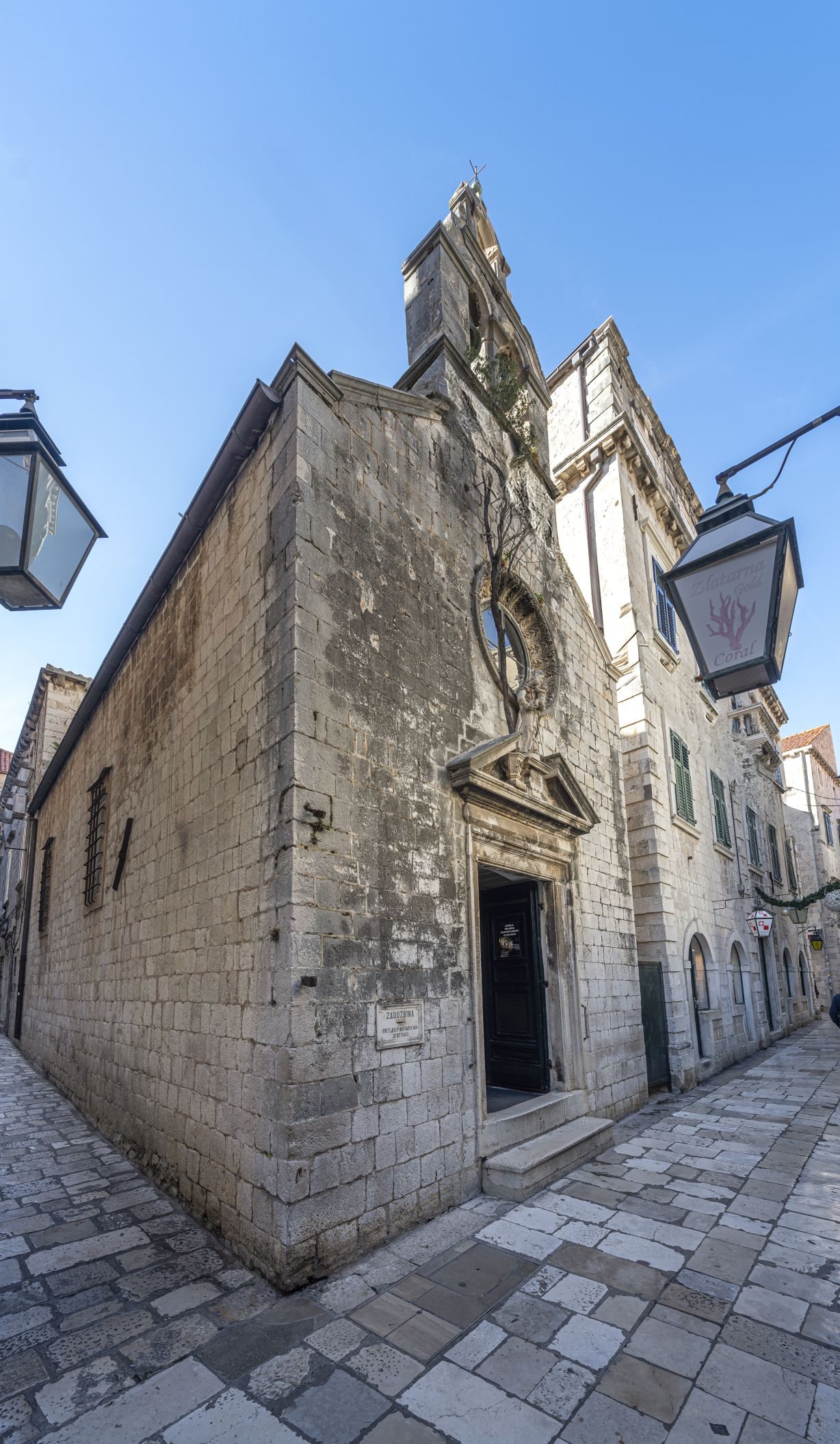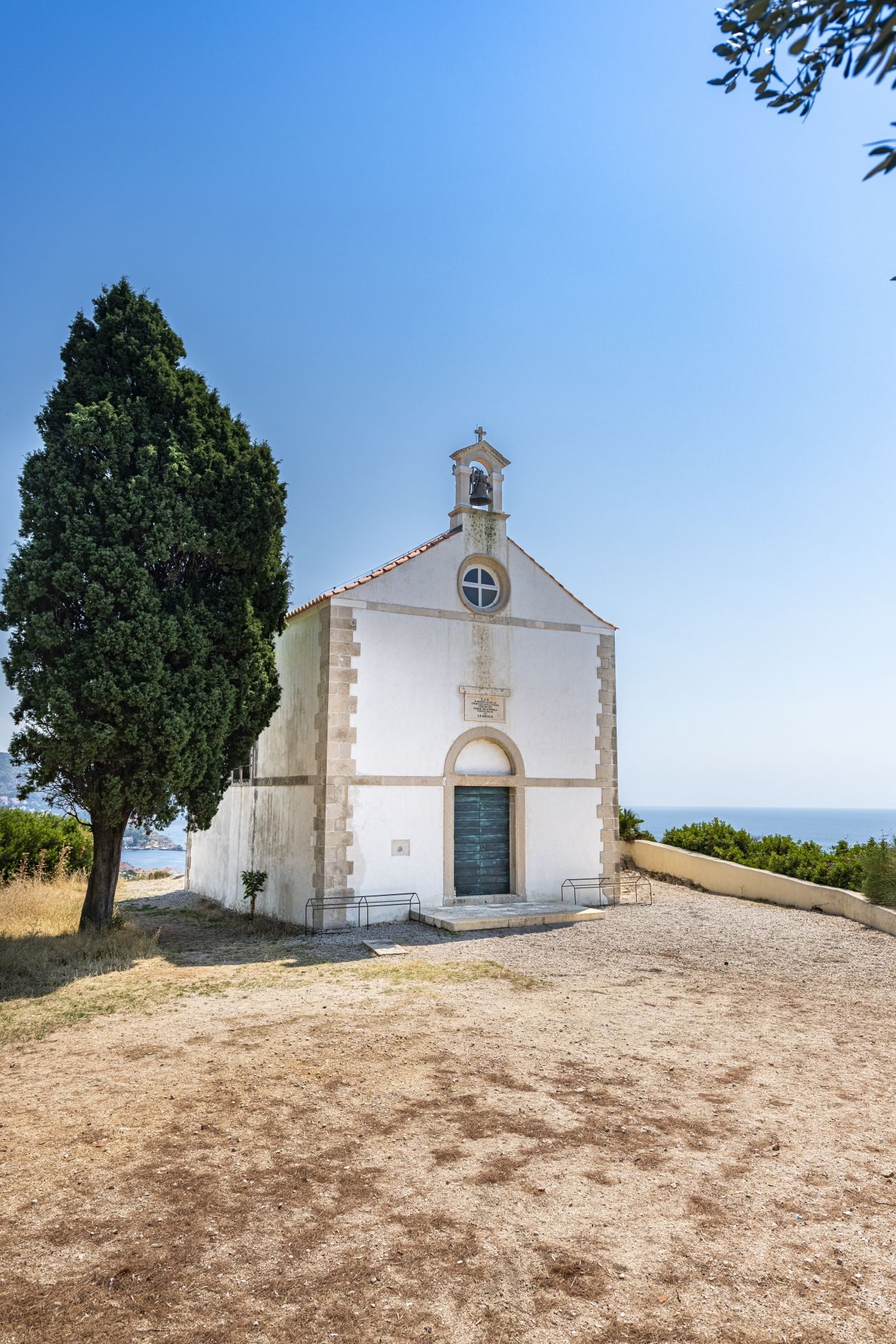


The original Franciscan monastery did not stand where it stretches today—next to the Church of St. Saviour, running from the Stradun all the way toward Minčeta Fortress.
When war threatened the Dubrovnik Republic in the early 14th century, the Franciscans were compelled to relocate from Pile—then outside the city walls—into the safety of the Old City. Construction of the new monastery began in 1317 and continued for many years, ultimately becoming a true jewel of the Republic's cultural and artistic heritage.
Over the centuries, parts of the large complex suffered damage—most notably in 1667, when a devastating earthquake struck the city. Only a fragment of the monastery's original splendor survives: the southern portal with its Gothic architrave, adorned by a moving Pietà. This sculpture of the Virgin cradling the body of Christ is a masterpiece carved in 1498 by Dubrovnik stone-carving brothers Leonardo and Petar Petrović.
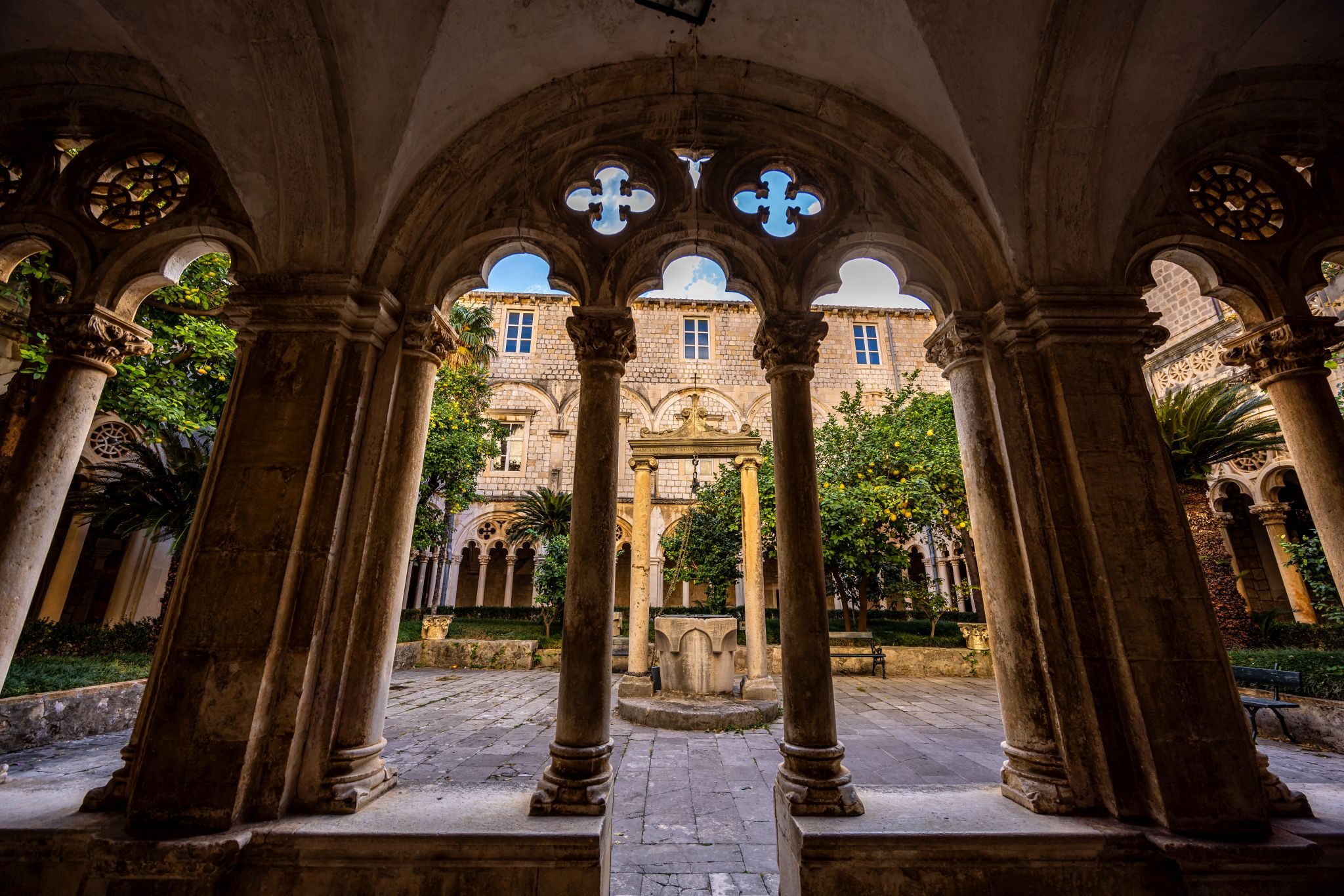
Today's Franciscan church was rebuilt in the Baroque style, and inside rests the tomb of literary giant Ivan Gundulić. The monastery cloister, crafted by master Mihoje Brajkov of Bar, is late Romanesque in design and ranks among the finest creations of its era in Dalmatia.